Group Prompt: In 2030, Coventry University and the University of Warwick recognise the mutual benefit of investing in, and working with, the city’s artists through joint research projects and long term learning partnerships. Seeing artists as researchers enriches both parties’ work and their understanding about the world, as well as transforming the communication, and deepening the impact, of research findings. The development of this research-partnership methodology has drawn interest and investment from across Higher Education and Business. An Artists’ Accreditation scheme conveys reduced rate access for members to selected central shared resources, and the Universities demonstrate a genuine commitment to supporting independent artists (not only recent graduates) through sharing access to resources such as printing facilities, 3D fabrication, digital, library access, tuition etc. Accelerated changes in technology / AI and how these affect our lives and opportunities for creative expression are explored and communicated, as well as the role that artists can play in bringing together specialists and communities across disciplines and walks of life to collaborate and enhance innovation.
Group facilitator: Andrea Mbarushimana
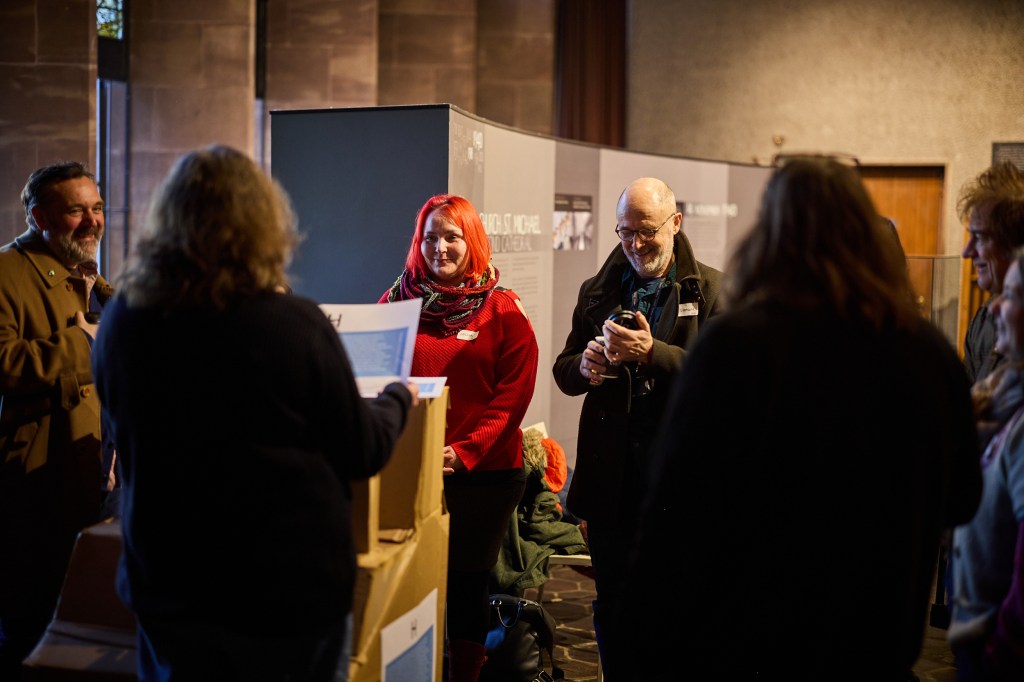
Our first group of the day mainly consisted of University employees, an organisation and a couple of freelance creatives. Our Vision statement focussed mainly on research and if you hadn’t got any experience of creative, interdisciplinary research, it was difficult to understand. There was plenty of discussion and an enthusiastic exchange of experiences around the involvement of creatives in Universities, covering mainly residencies and community outreach activities. The Uni staff involved in this discussion were all enthusiastic advocates of involving creativity more and some of them had pioneered activities in their faculties. However, it became clear that one part of the University didn’t know what the other parts were doing and that administrative and strategic support from higher up the chain was not only missing, but was a very real barrier. Suggestions for action involved the use of meanwhile spaces and better communication about opportunities. It was apparent that Universities had limited ways of finding new freelance faces to fit their initiatives and creatives were frustrated by being unable to find information.
The refining activity involved new University representatives and creatives. Discussion was frustrated by a lack of vision amongst University staff about the usefulness of involving creatives in research. There seemed to be a pervasive sense of creative involvement being limited to patronage. It was clear that creatives need to be better at shouting about some of the amazing research collaborations they have been involved with and how these have directly benefitted the research itself. The Universities had seen the benefit to being involved in the City of Culture year and wanted to continue that kind of relationship with creative industries, but also admitted to no longer having the budget to maintain it. Staff from Creative organisations raised the issue that Universities had a history of expecting their representation at events for free and freelancers talked about community arts opportunities being poorly paid. It was noted that of all the ESF funded projects in Coventry, only the FABLAB had not been refunded by Cov Uni, despite the fact it covered most of the Vision Statement. Again, there was a gap between the decisions made higher up and the efforts of faculty staff.
I would’ve liked to see people from Business In The Community and the City Council in this group, and representatives from Severn Trent and Eon, who have a significant presence in the city. The discussion suggested that this vision statement needs refining and that there is a lot of work to do to achieve the inspirational 2030 we heard about in the opening speech. Cov Uni is currently writing it’s Creative Strategy for the next five years, so the timing of the conference was great. There was loads of energy in the discussion, and a determination to move forwards, so I feel positive about the future.
Note – the Unis are doing a lot already, but feeling is that they are not communicating it well.
Big Ideas:
- Acknowledge that there are passionate people at the Unis that value and support artists – but they are squashed from above by management constraints.
- Develop and communicate a solid understanding of what artists can contribute, particularly in research.
Quick wins:
- To advertise University opportunities in Arts Listings through Arts Council England as well as through Talking Birds and Coventry Artspace.
- To hold F13 and Artspace meetings at the Universities to get artists into those buildings (it would be great if random members of different faculties could be present, too, in order to learn about what creatives are doing in the city)
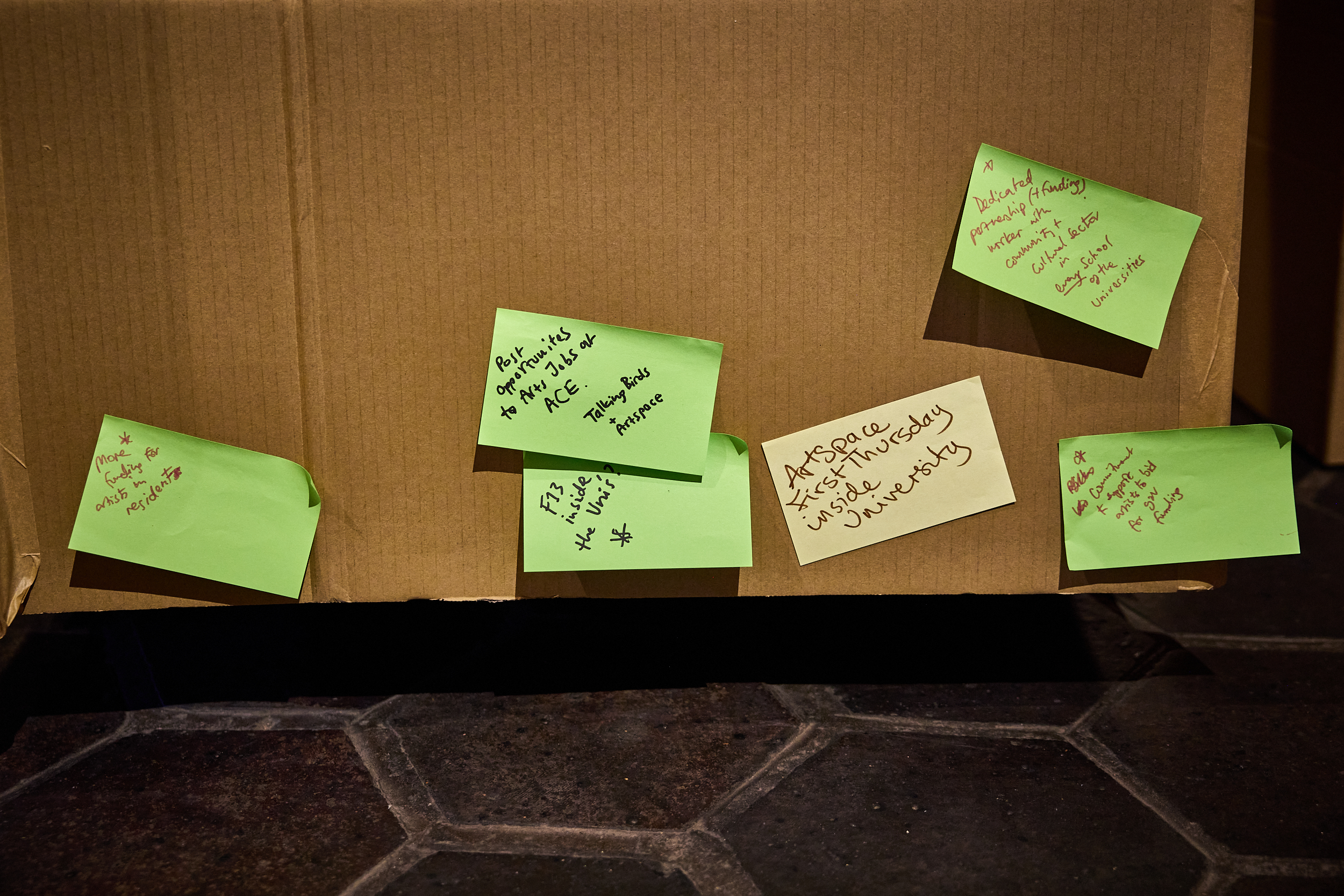
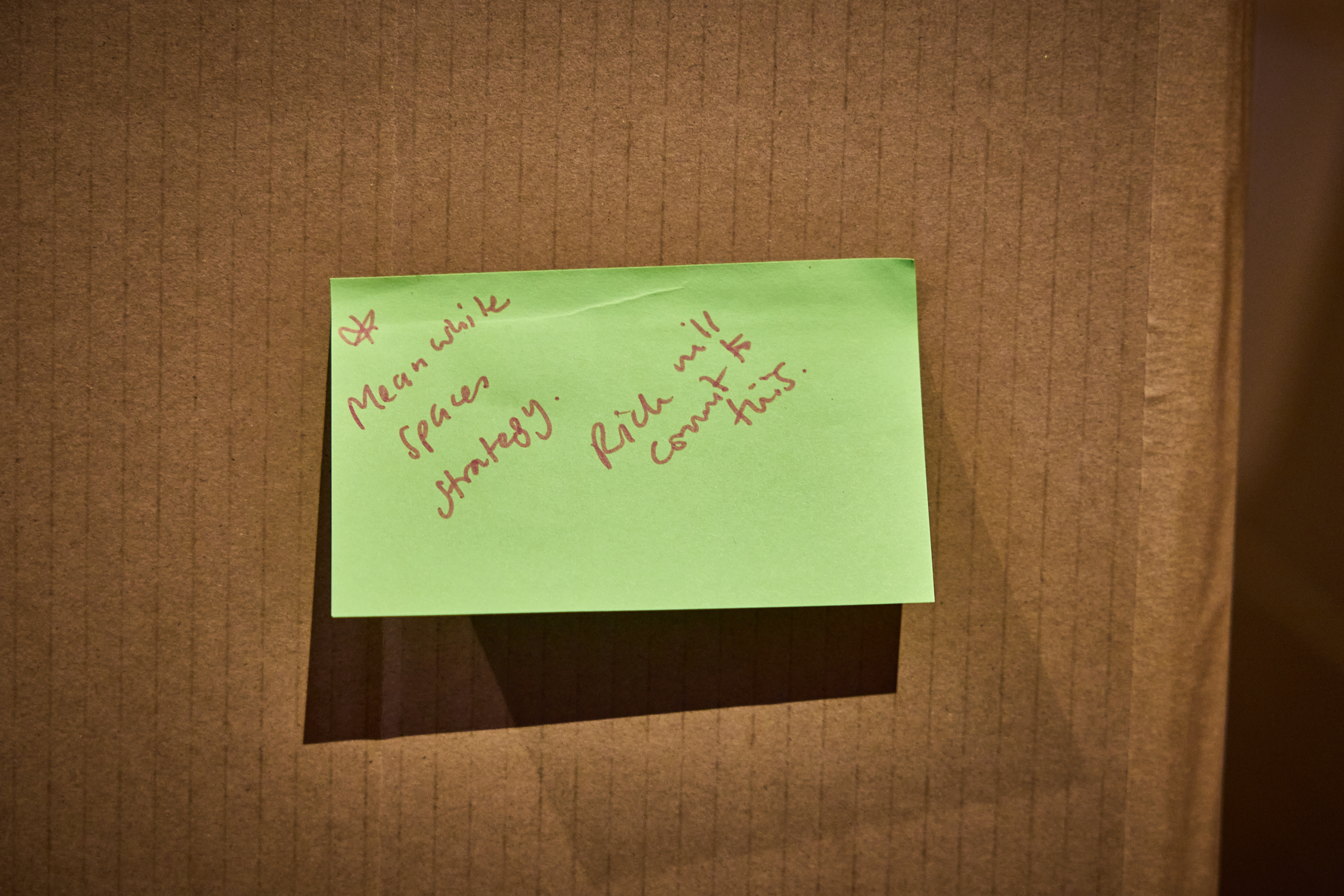
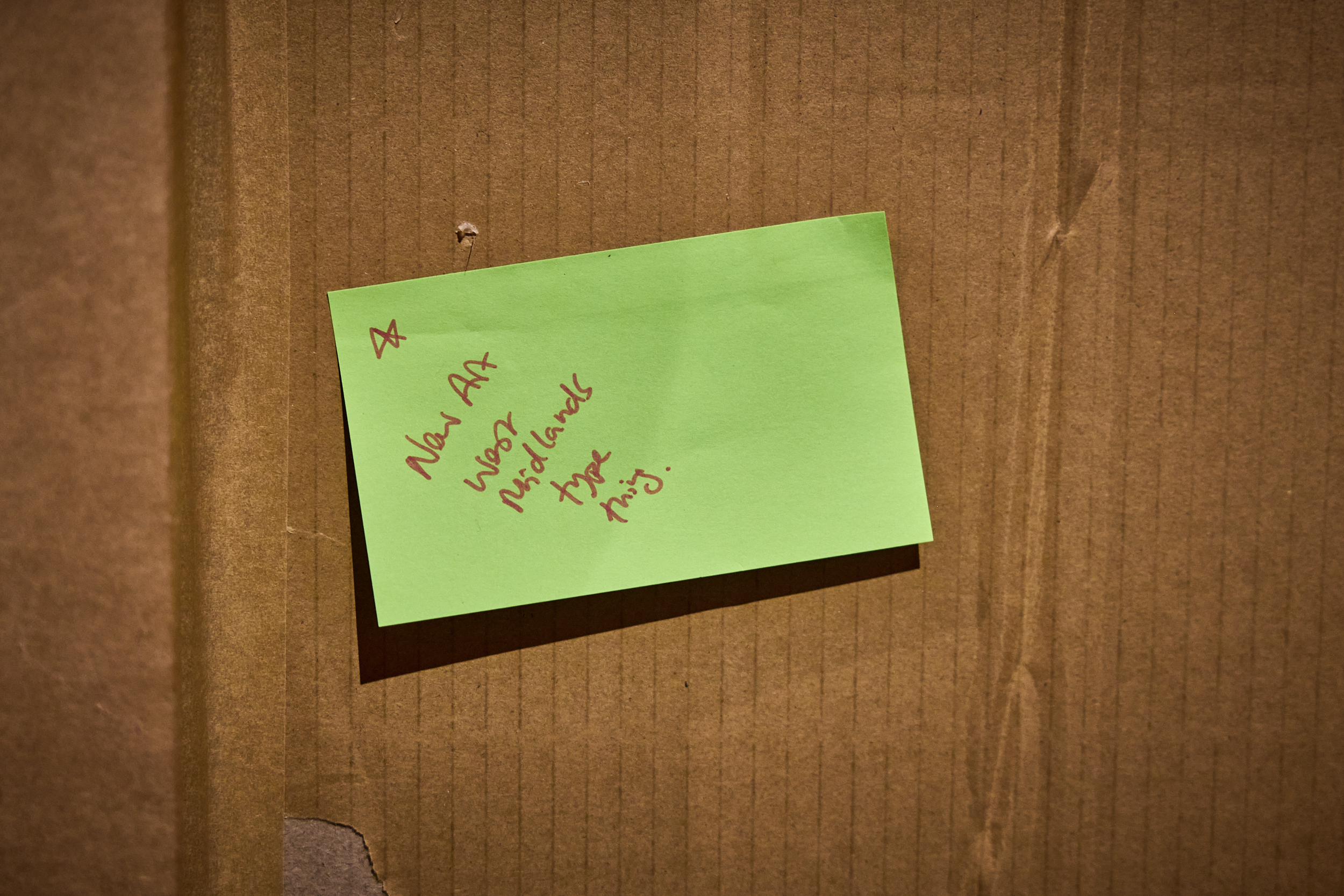
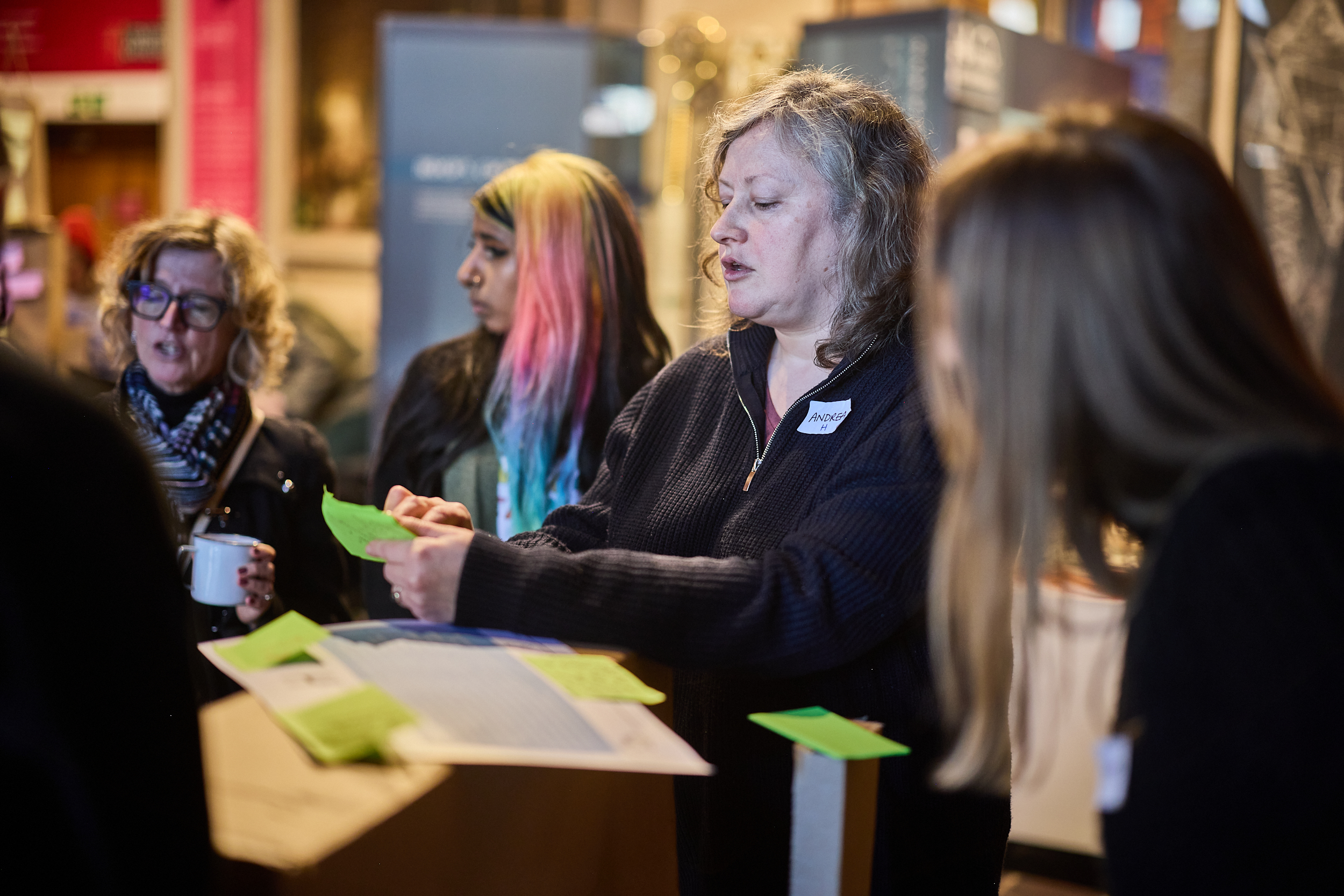
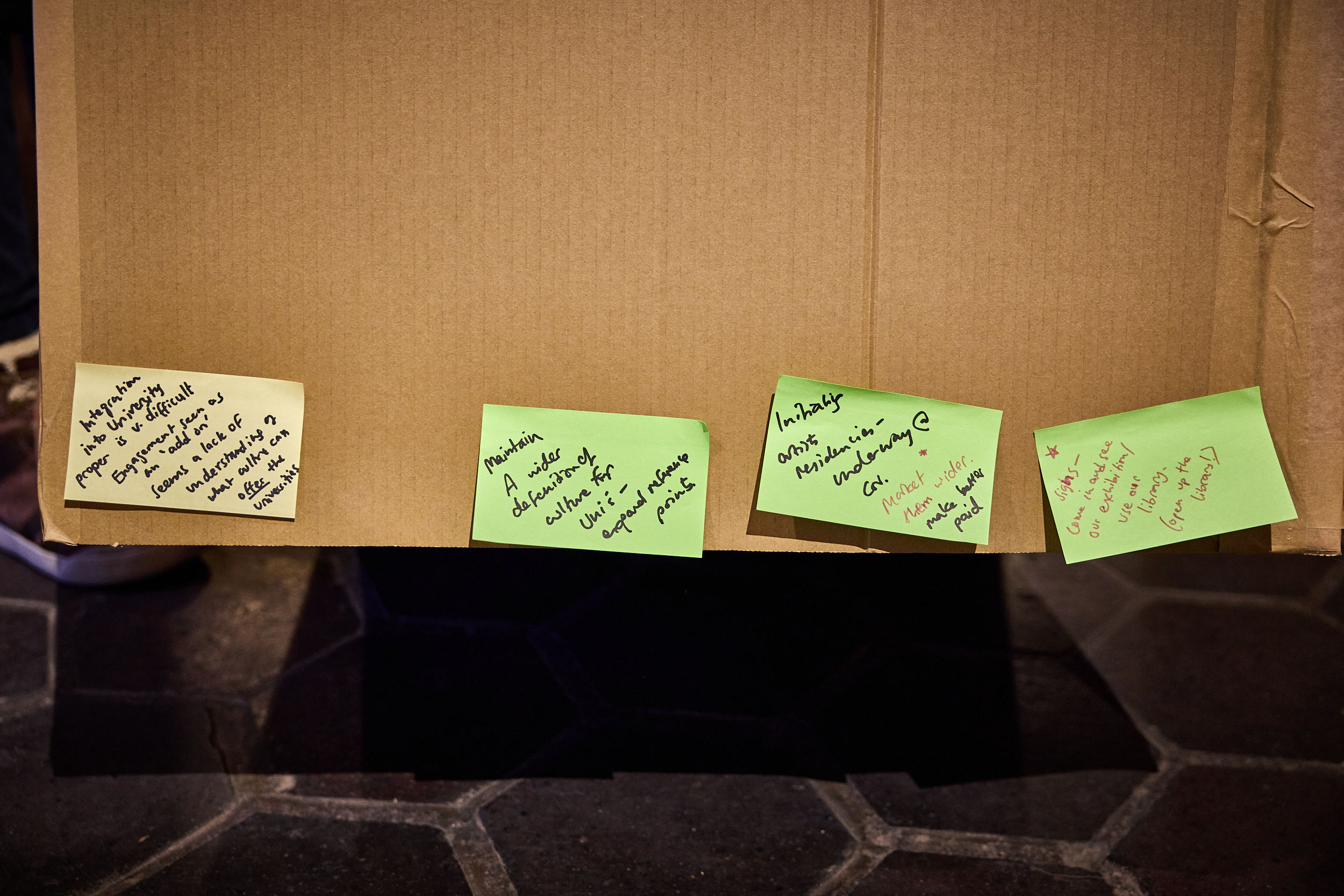
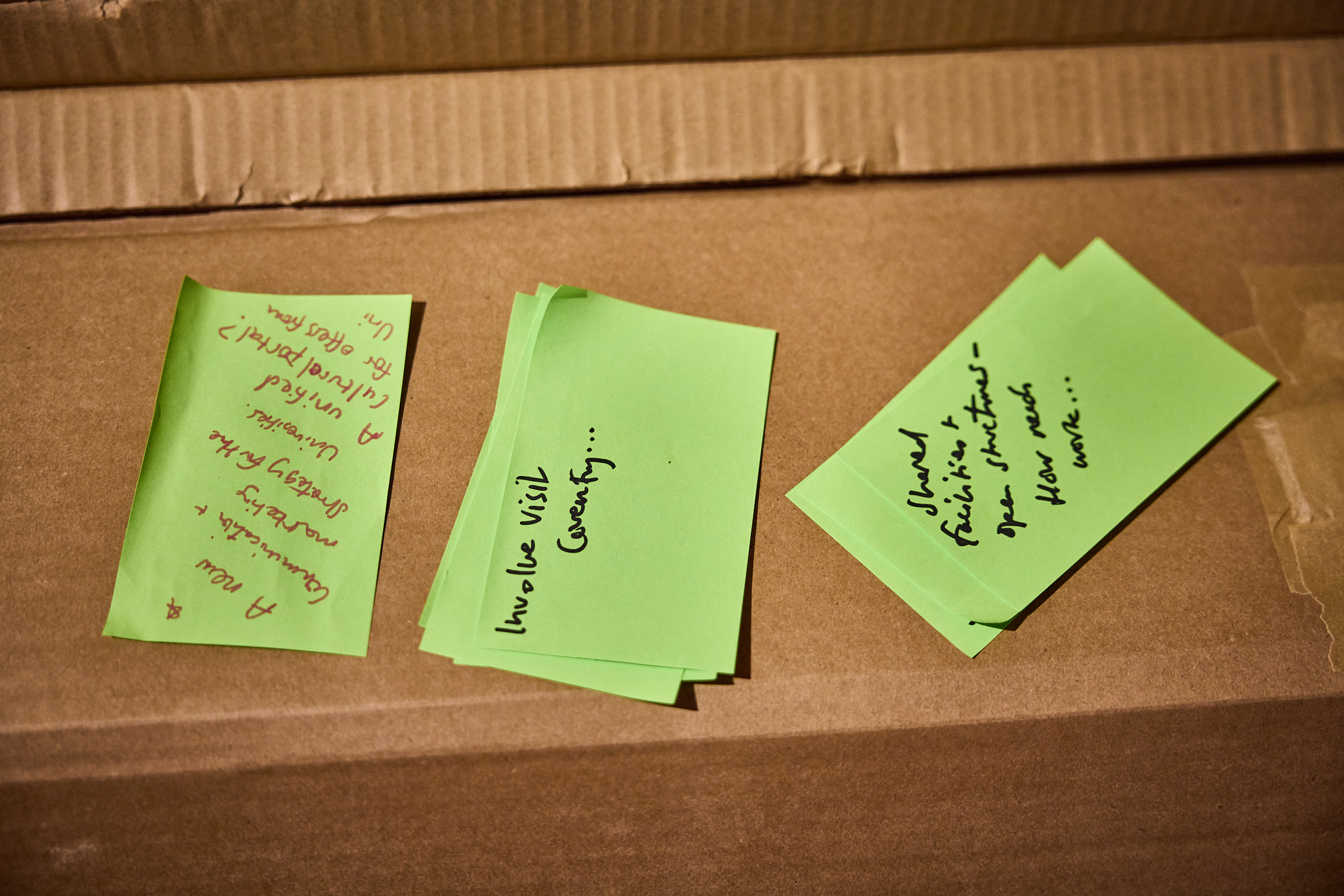
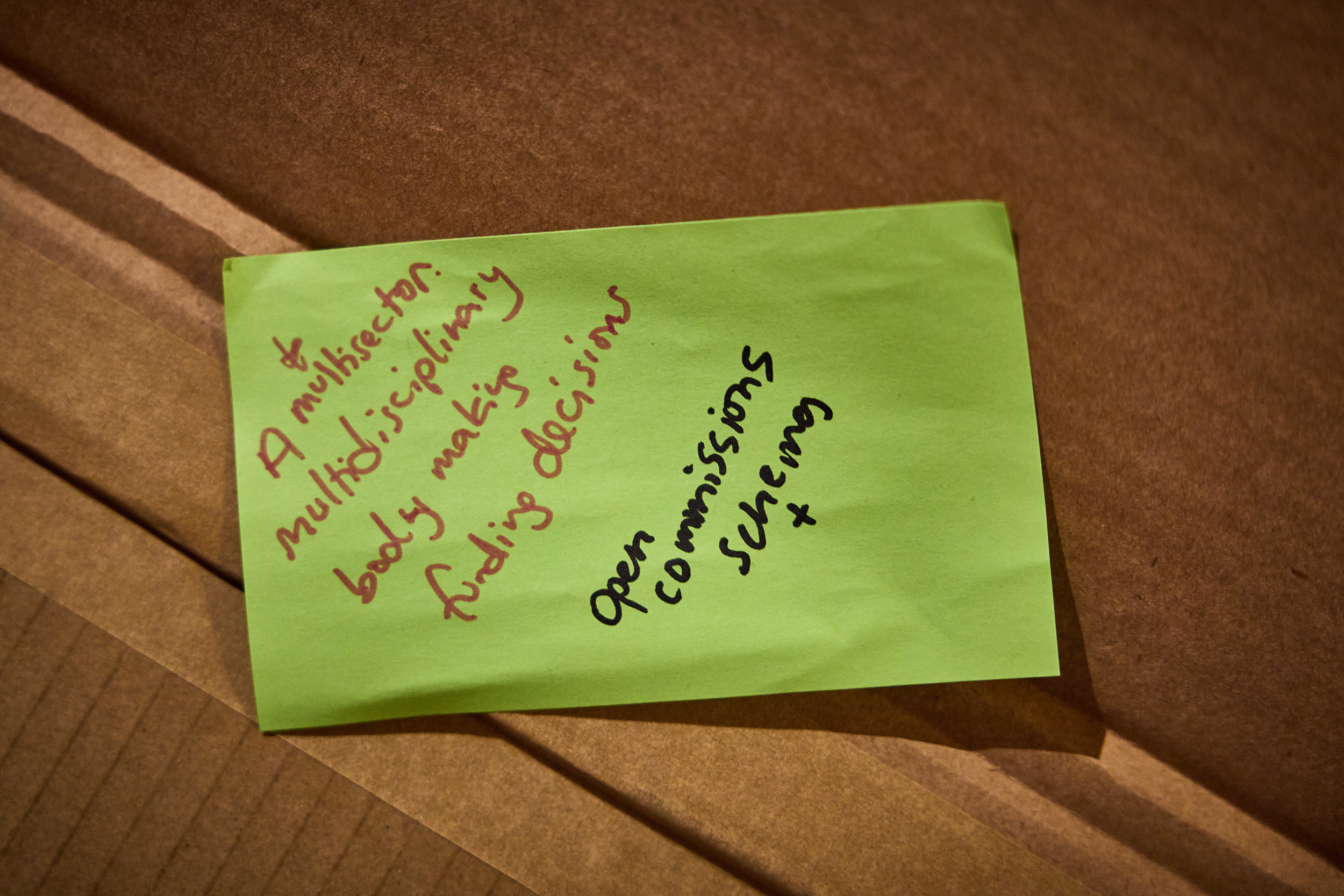
Transcript of post-its: from base of building (easy) to roof (harder/longer-term)
Image 180124_227
- More funding for artists in residence
- Post opportunities to Arts Jobs at ACE, Talking Birds & Artspace.
- F13 inside the Unis.
- Dedicated partnership (and funding) worker with community and cultural sector in every school of the universities.
- Artspace First Thursday inside University.
- Commitment & support artists to bid for funding
Image 180124_22
- Meanwhile spaces strategy. Rich will commit to this.
Image 180124_230
- New Art West Midlands type thing.
Image 180124_233
- Integration into University proper is v. difficult. Engagement seen as an ‘add on’, seems a lack of understanding of what culture can offer the universities.
- Maintain a wider definition of culture for unis – expand referencing points.
- Initiating artists residencies – underway at Cov. Market them wider, make better paid.
- Signs – come in and see our exhibition / use of library / open up the library!
Image 180124_237
- A new communication and marketing strategy for the universities. A unified cultural portal for offers from Uni.
- Involve Visit Coventry
- Shared facilities & open structures – how needs work…
Image 180124_239
- A multisector multidisciplinary body making funding decisions. Open commissions schemes.
 The Culture Works Collective