Group Prompt: In 2030, the people who live here are proud of this welcoming and democratic place. A place where we work together to uplift everyone and dissolve divisions, and use arts and culture as tools to help our communities imagine – and grow – their own agency to make change happen. We pioneered the use of Citizens’ Assemblies in arts (and other) policy making, and the way we have placed inclusive people-powered creativity and collaboration at the centre of local democracy means that we often welcome representatives from across the world eager to learn from our innovations.
Group facilitator: Kim Hackleman.
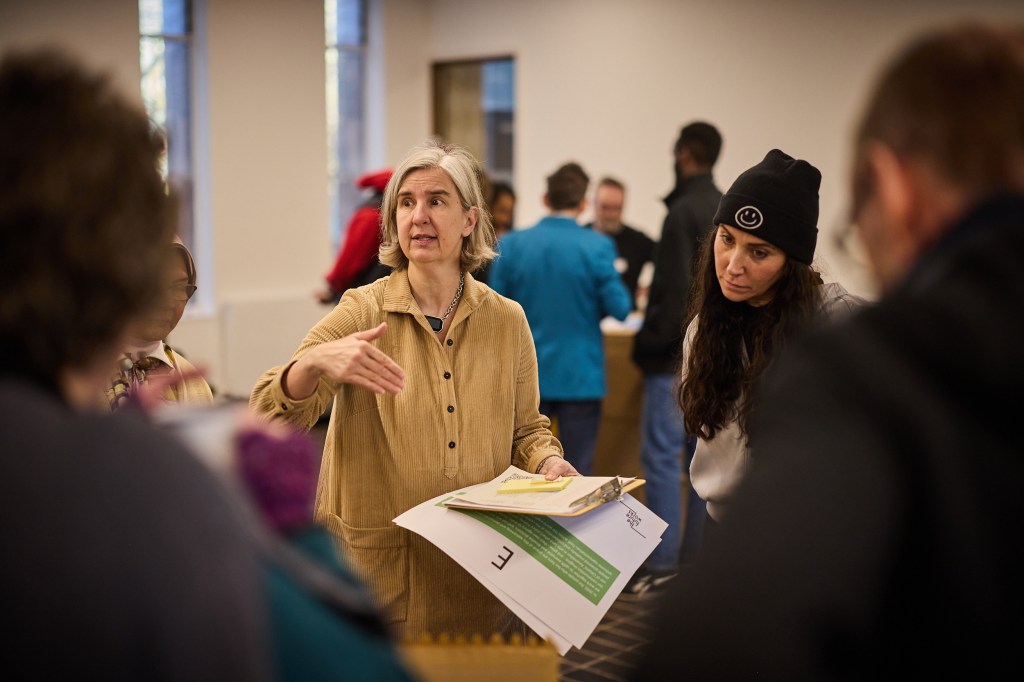
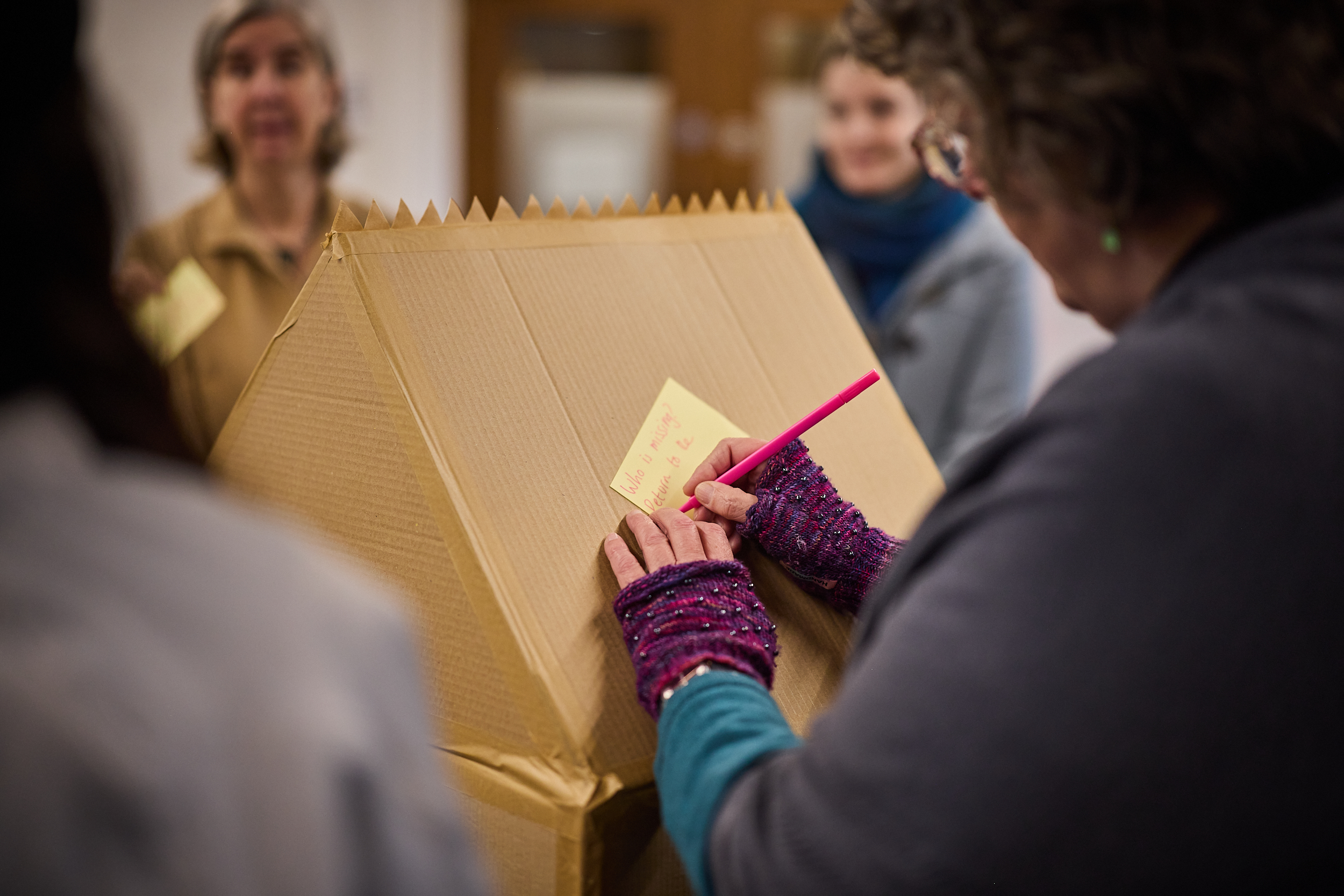
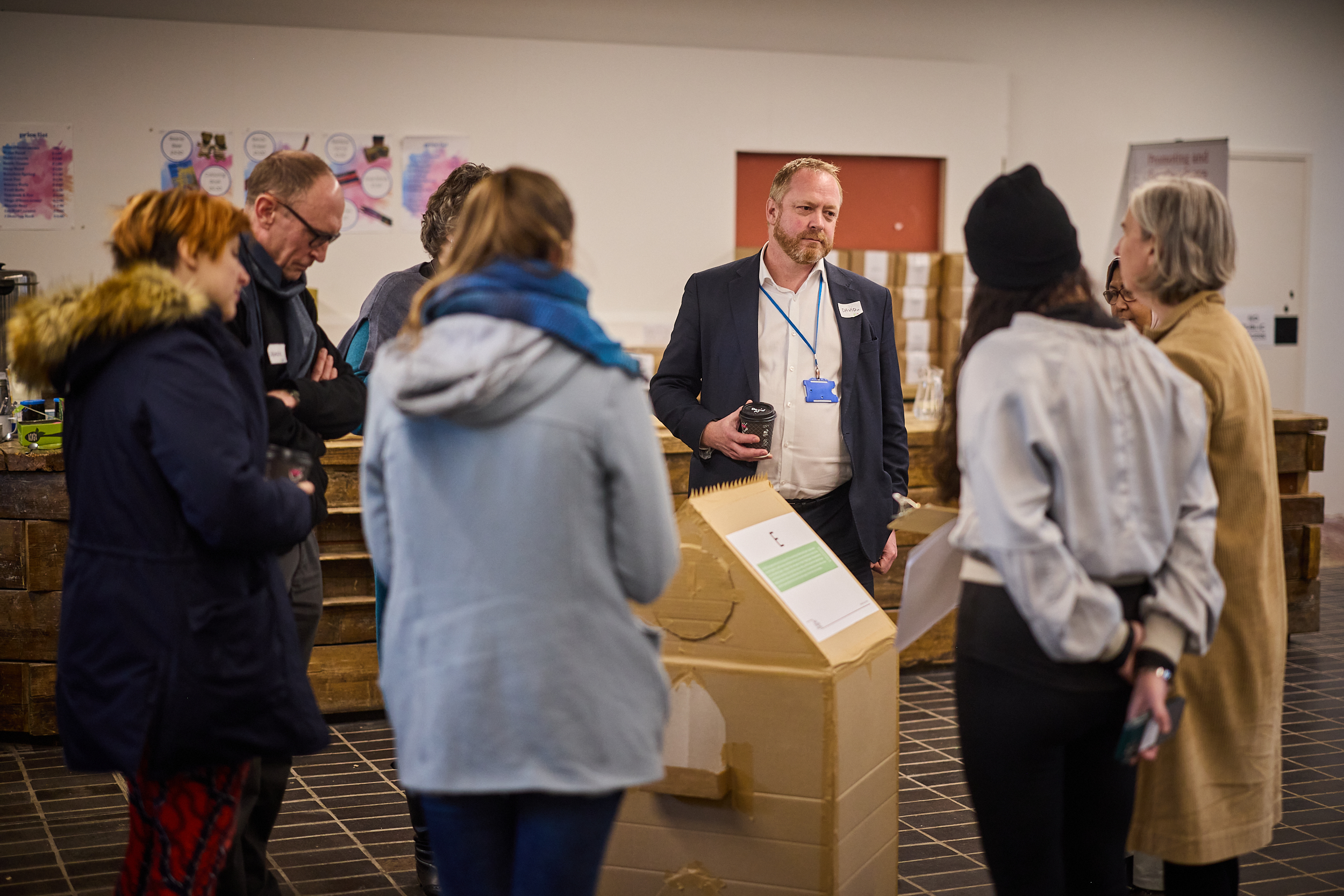
I facilitated the “Inclusion and Democracy” house groups. I wanted to make certain that we all began together in an inclusive manner, so we waited until all were present and introduced ourselves by first name and pronouns. The first group nominated me to read the 2030 vision. Each person shared their thoughts of significant actions we might take to achieve that vision between now and then, then wrote their own on a post-it note and collectively we decided where to place it, depending on if the group felt it was a short-term or long-term process. There were many actions the group believed would need to be repeated (such as regularly reviewing if all communities had representation in the decision making and implementing process). There was an air of excitement and determination, with active listening and respectful consideration of others throughout.
The second group again nominated me to read, I suggested they could read silently while I read aloud both the 2030 vision and the post-it note actions of the first group. They quickly narrowed these to two most significant actions: 1. The process of reviewing both what is already happening (such as the Citizens Assembly) and who is not in the room (with a suggestion of creating a Young Persons Citizens Assembly, to ensure the voice is present) 2. Creating a central place where funding opportunities and processes could be made more transparent and accessible to all (small grassroots organisations and freelancers as well as larger organisations). For the quick win, however, instead of focusing on what the first group had brought to the house, they suggested changing the word “democracy”, many voicing that they do not see it as an inclusive form of organising.
Big Ideas:
- Audit who is not in the room, repeat this in 2030. Don’t expect people to come to you!
- Audit what is going on in the city now.
Quick wins:
- Change the word ‘democracy’ and think about other structures that could be used instead.
- Make funding sources and structures more transparent and available.
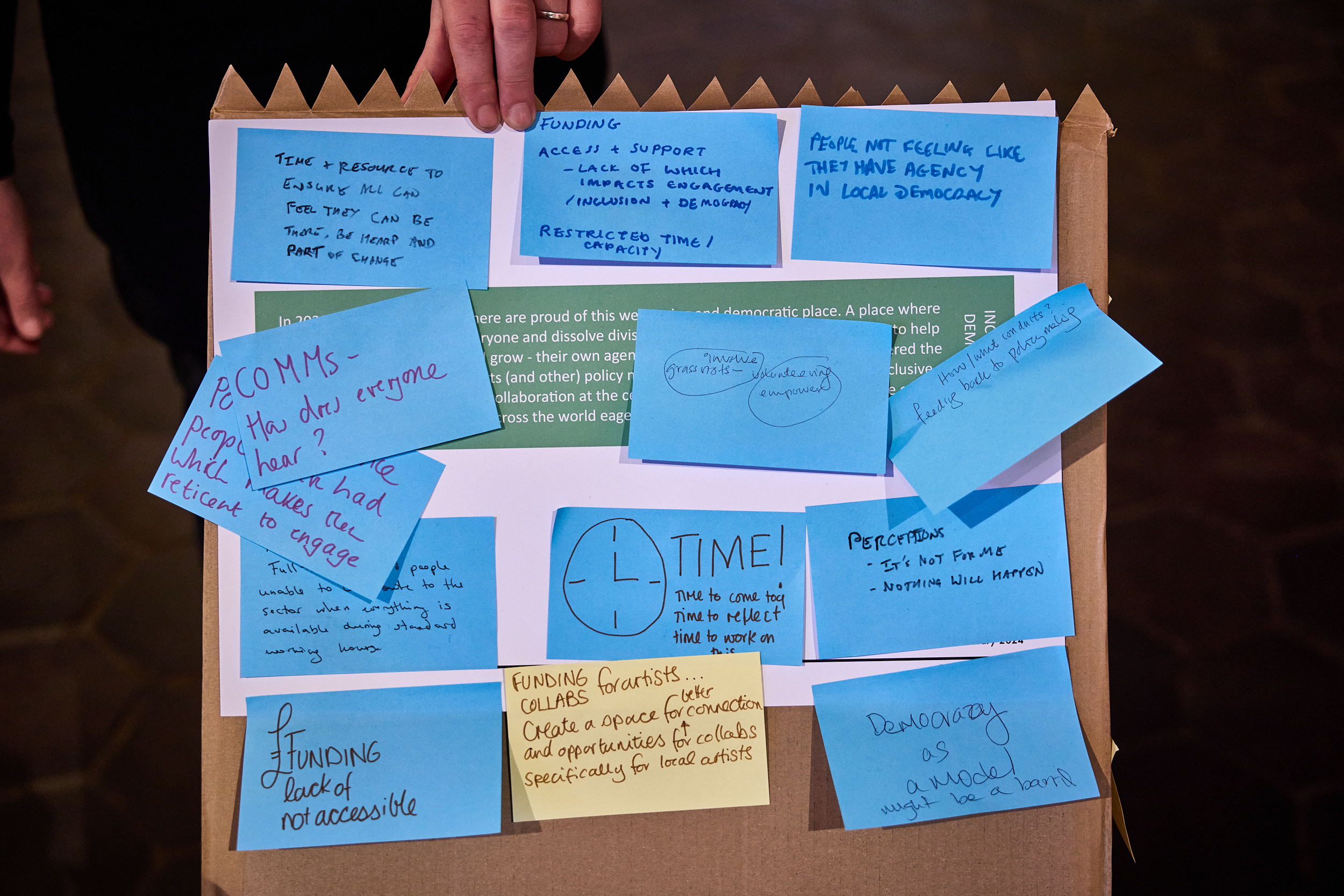
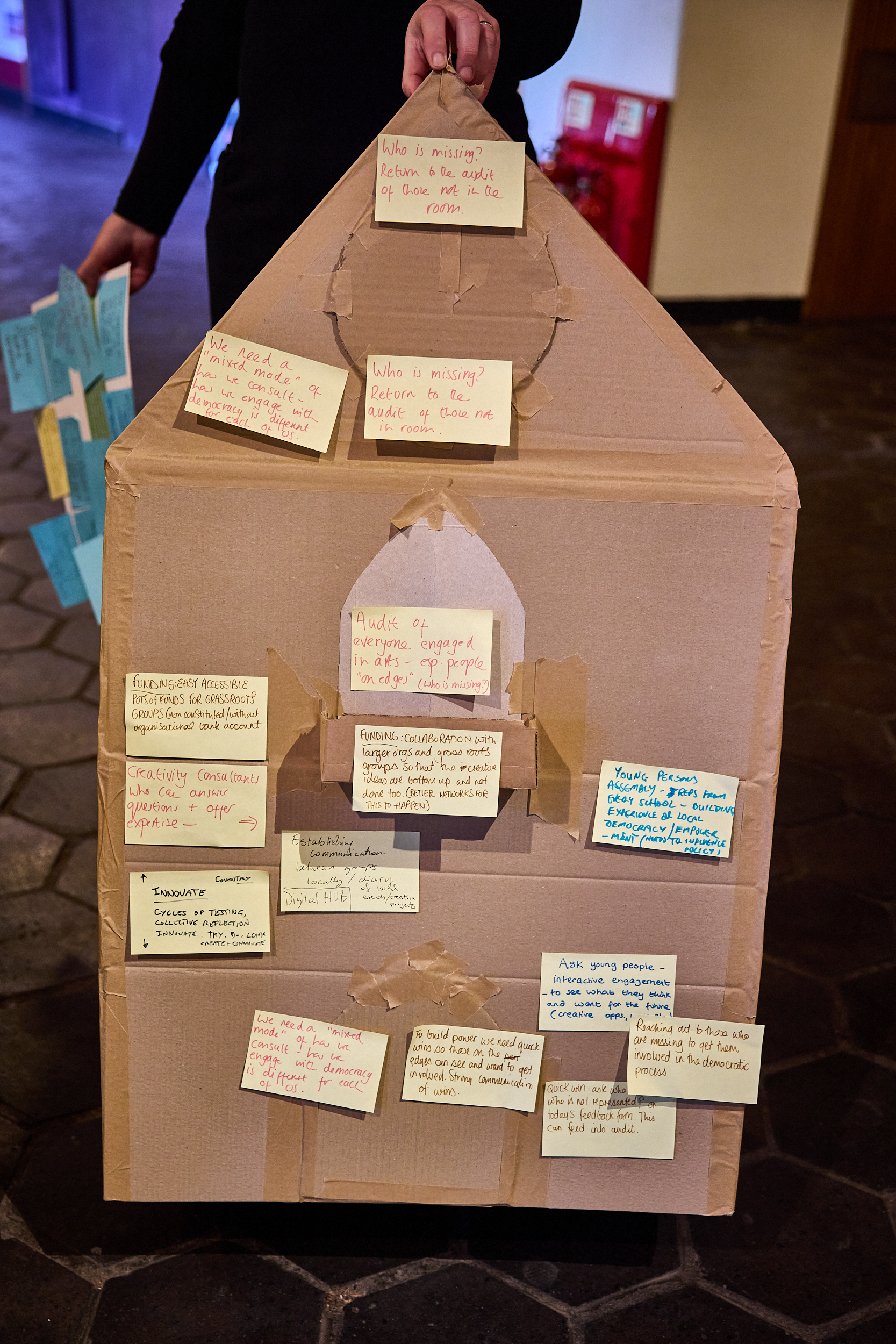
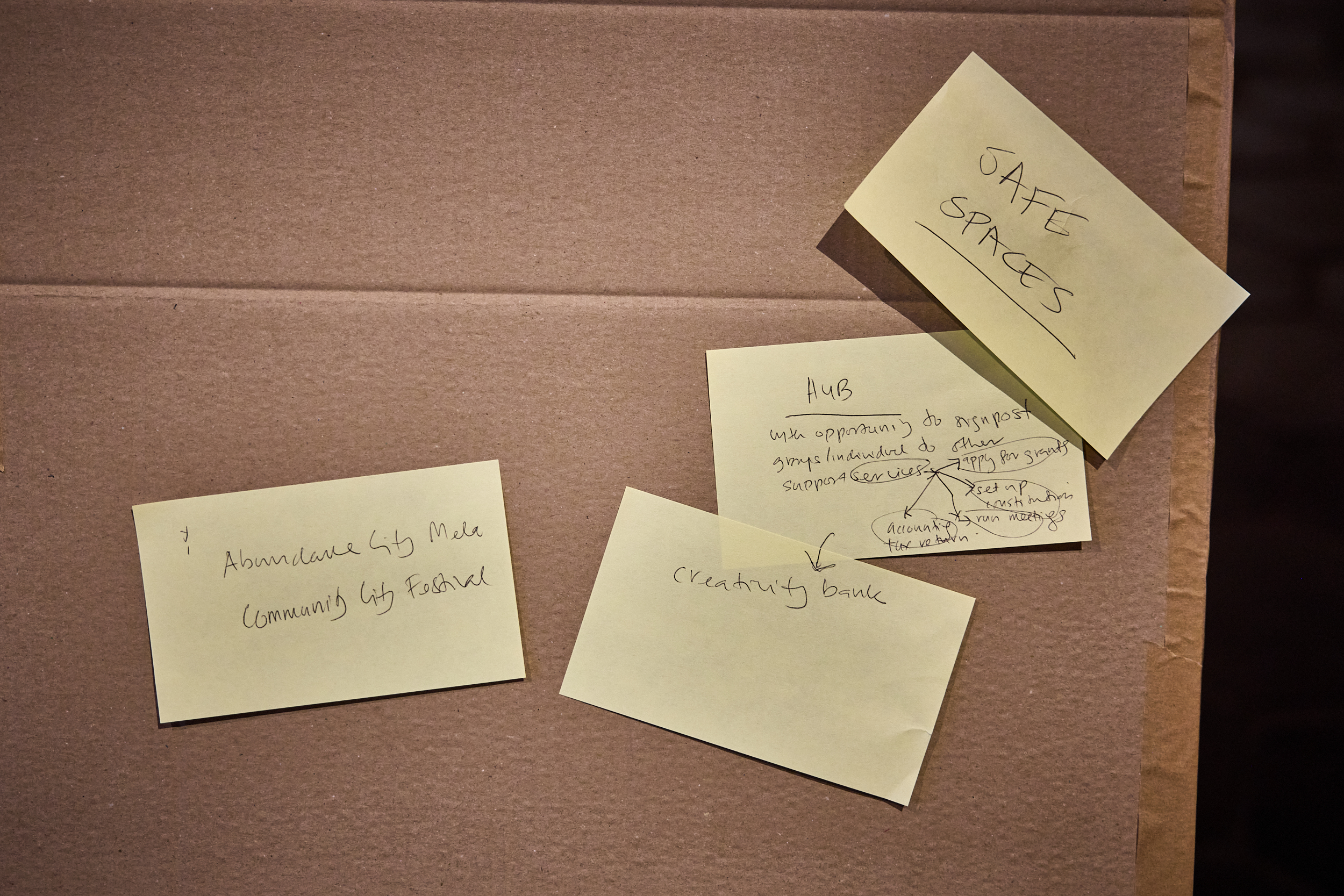
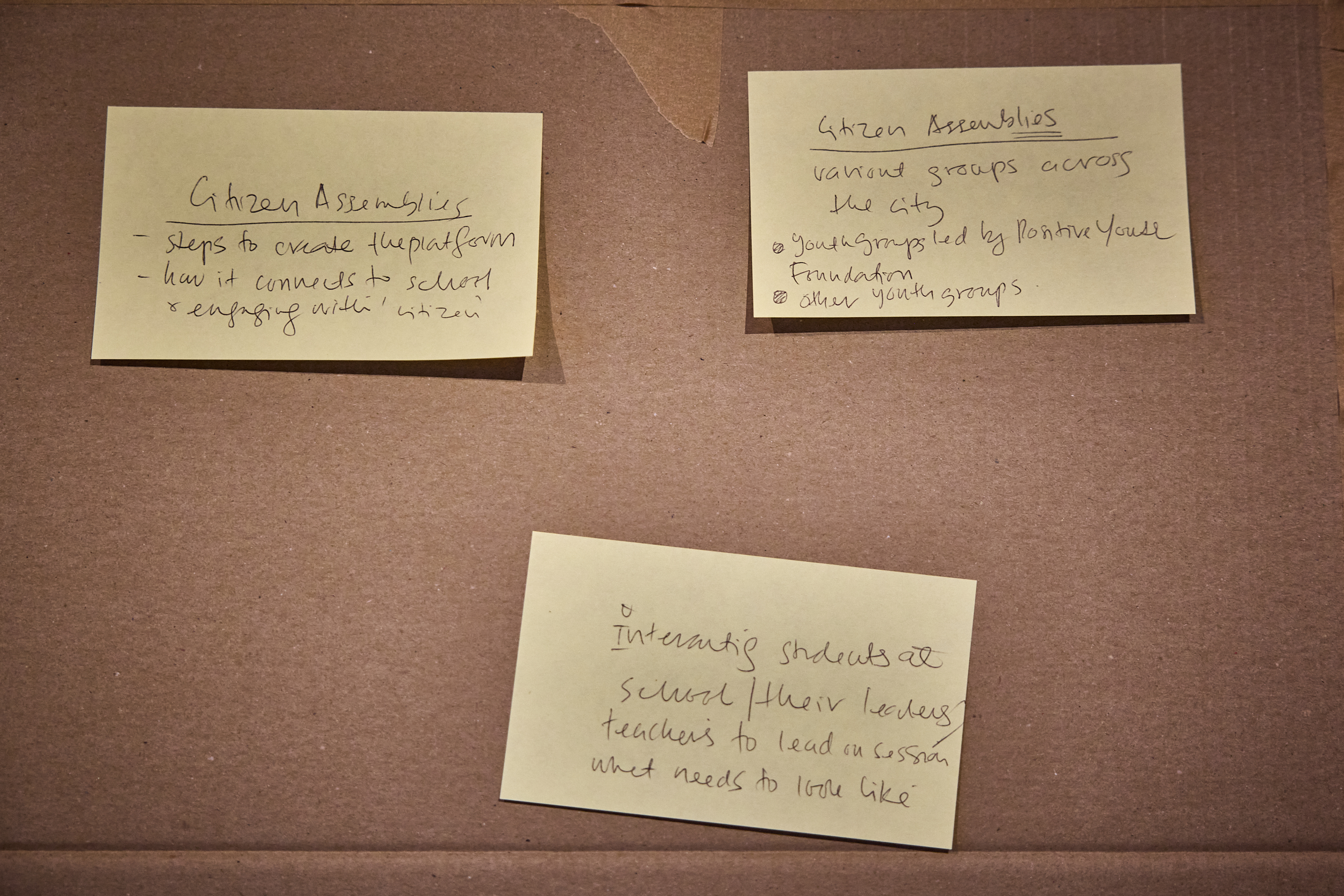
Transcript of post-its: from base of building (easy) to roof (harder/longer-term)
Image 180124_242
- Funding lack of, not accessible.
- Funding collabs for artists … creative a space for better connection and opportunities for collabs specifically for local artists.
- Democracy as a model might be a barrier
- Full time people unable to contribute to the sector when everything is available standard working hours
- Time! Time to come today, time to reflect, time to work on this.
- Perceptions – it’s not for me, nothing will happen
- Comms – how does everyone heard?
- Grass roots – volunteering empower
- How/what contacts? Feeding back to policy making.
- Time and resources to ensure all can feel they can be there, be heard and part of change.
- Funding access & support – lack of which impacts engagement / inclusion & democracy
- People not feeling like they have agency in local democracy
Image 180124_243
- We need a ‘mixed’ mode of how we consult – how we engage with democracy is difficult for each of us.
- To build power we need quick wins so those on the edges can see and want to get involved. Strong communication of wins.
- Ask young people – interactive engagement – to see what they think and want for the future (creative opportunities).
- Quick win – ask who is and who is not represented on today’s feedback form. This can feed into audit.
- Reaching out to those who are missing to get them involved in the democratic process.
- Innovate – cycles of testing collective reflection, innovate
- Establishing communication between groups locally / diary of local events/ creative projects – Digital hub
- Young persons assembly – reps from every school building experience of local democracy / empowerment (needs to influence policy)
- Creativity consultants who can answer questions and offer expertise.
- Funding collaboration with large orgs and grass roots groups so that the creative ideas are bottom up and not done too (better networks for this to happen).
- Young persons assembly – representatives from every school – building experience of local democracy / empowerment – needs to influence policy
- Funding – collaboration with larger organisations and grass roots so that the creative ideas are bottom up and not done to (better networks for this to happen).
- Funding easy accessible pots of funds for grassroots groups (non constituted / without organisational bank account)
- Audit of everyone engaged in arts – especially people ‘on edges’
- We need a ‘mixed mode’ of how we consult – how we engage with democracy is different for all of us.
- Who is missing? Return to audit of those not in the room.
Image 180124_248
- Safe spaces
- Hub with opportunity to signpost groups/individuals to other support services – apply for grants, set up constitution, accounting for return, run meetings – creativity bank.
- City mela, community city festival
Image 180124_251
- Interacting students at school/their leaders, teachers to lead on session what needs to look like.
- Citizen Assemblies – Steps to create the platform, how it connects to school and engaging with ‘citizen’.
- Citizen Assemblies – various groups across the city – youth group led by Positive Youth Foundation, other youth groups.
 The Culture Works Collective